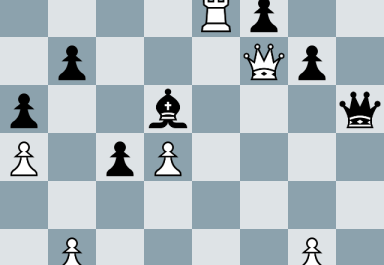
Steinitz – Mongredien The so-called “Modern Defense”. Quite old, actually! Steinitz Mongredien Result: 1-0 Metadata » Click to open. Date: 1863.??.?? Location: ? Tournament: London Round: Opening: Submitted by: Published on: February 9, 2020 [Event "London"] [Site "?"] [Date "1863.??.??"] [Round "?"] [White "Steinitz"] [Black "Mongredien"] [Result "1-0"] [PlyCount "43"] 1.e4 g6 {The so-called "Modern Defense". Quite old, actually!} 2.d4 Bg7 {What is so "modern" about this opening? The reader may well wonder, since the early fianchetto was routinely employed by Mongredien in the mid 19th Century.} 3.c3 b6 4.Be3 Bb7 5.Nd2 {The problem with Black's approach at that time is that it acted as if White were not a participant in the game. Here Steinitz erects a solid center with plenty of support, and he does not overextend, so Black has no targets.} d6 6.Ngf3 e5 7.dxe5 {Steinitz reso lutely avoids advances which might provide targets for Black's pieces. 7.d5 c6 8.c4 Ne7 9.Be2 f5 gives Black good counterplay.} dxe5 8.Bc4 Ne7 9.Qe2 {White controls a lot of squares and is about to take the d-file, after which the Black queen can be embarassed.} O-O 10.h4 {The general rule is that one reacts to flank activity with a counter- thrust in the centre, but here Black has nothing to do in the middle of the board.} Nd7 11.h5 Nf6 12.hxg6 {12.Nxe5 Nxh5 13.Nxf7 Rxf7 14.Rxh5 gxh5 15.Qxh5 Qf8 16.O-O-O b5 17.Rh1 h6} Nxg6 {12...hxg6 13.Nxe5} 13.O-O-O c5 {Black does not appreciate the danger he is in on the kingside.} 14.Ng5 a6 {This slow plan to dislocate the bishop has no chance of success.} 15.Nxh7 {The beginning of a decisive combination.} Nxh7 16.Rxh7 Kxh7 17.Qh5+ Kg8 18.Rh1 {18.Qxg6 Qf6!} Re8 {The only way to avoid mate at h7.} 19.Qxg6 Qf6 20.Bxf7+ {Now that the rook has been displaced from f7, this brings the game to a close.} Qxf7 21.Rh8+ Kxh8 22.Qxf7 1-0 [Event "London"] [Site "?"] [Date "1863.??.??"] [Round "?"] [White "Steinitz"] [Black "Mongredien"] [Result "1-0"] [PlyCount "43"] 1.e4 g6 {The so-called "Modern Defense". Quite old, actually!} 2.d4 Bg7 {What is so "modern" about this opening? The reader may well wonder, since the early fianchetto was routinely employed by Mongredien in the mid 19th Century.} 3.c3 b6 4.Be3 Bb7 5.Nd2 {The problem with Black's approach at that time is that it acted as if White were not a participant in the game. Here Steinitz erects a solid center with plenty of support, and he does not overextend, so Black has no targets.} d6 6.Ngf3 e5 7.dxe5 {Steinitz reso lutely avoids advances which might provide targets for Black's pieces. 7.d5 c6 8.c4 Ne7 9.Be2 f5 gives Black good counterplay.} dxe5 8.Bc4 Ne7 9.Qe2 {White controls a lot of squares and is about to take the d-file, after which the Black queen can be embarassed.} O-O 10.h4 {The general rule is that one reacts to flank activity with a counter- thrust in the centre, but here Black has nothing to do in the middle of the board.} Nd7 11.h5 Nf6 12.hxg6 {12.Nxe5 Nxh5 13.Nxf7 Rxf7 14.Rxh5 gxh5 15.Qxh5 Qf8 16.O-O-O b5 17.Rh1 h6} Nxg6 {12...hxg6 13.Nxe5} 13.O-O-O c5 {Black does not appreciate the danger he is in on the kingside.} 14.Ng5 a6 {This slow plan to dislocate the bishop has no chance of success.} 15.Nxh7 {The beginning of a decisive combination.} Nxh7 16.Rxh7 Kxh7 17.Qh5+ Kg8 18.Rh1 {18.Qxg6 Qf6!} Re8 {The only way to avoid mate at h7.} 19.Qxg6 Qf6 20.Bxf7+ {Now that the rook has been displaced from f7, this brings the game to a close.} Qxf7 21.Rh8+ Kxh8 22.Qxf7 1-0 White to move: find the best move... click the ? for the solution Black to move: find the best move... click the ? for the solution Warning: This game can only be seen if JavaScript is enabled in your browser. No related posts.