 by
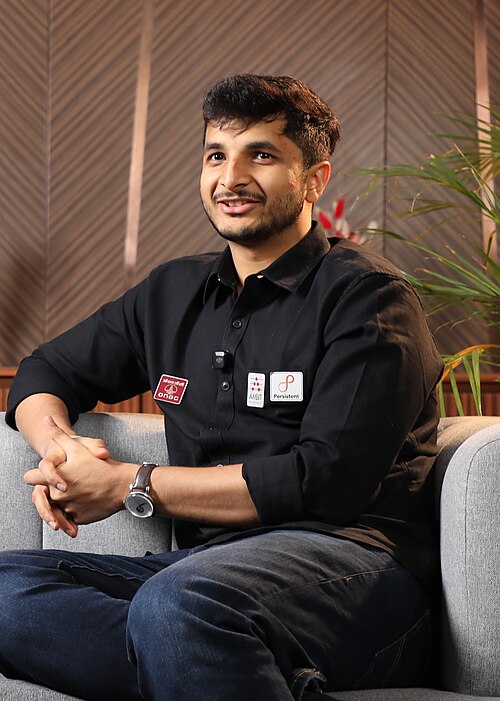
by The journey of a Grandmaster, Candidates contender, Olympiad champion and 2026 Arjuna Award recipient
Indian chess has produced several generations of extraordinary players. Viswanathan Anand opened the door to the global elite; Gukesh, R. Praggnanandhaa and Arjun Erigaisi have pushed it further open. Between these generations stands another important figure: Vidit Santosh Gujrathi.
Born on 24 October 1994 in Nashik, Maharashtra, Vidit has established himself as one of India’s leading Grandmasters. His career combines junior excellence, sustained performance at the highest level, a memorable victory at the 2023 FIDE Grand Swiss, qualification for the 2024 Candidates Tournament, and a major team triumph at the 2024 Chess Olympiad.
In August 2026, another significant chapter was added to his career: Vidit was selected for the Arjuna Award, India’s prestigious national sporting honour. The award recognises his performances and contribution to Indian chess and places him among a distinguished group of Indian sportspersons.
The Nashik Boy Who Chose Chess
Vidit’s journey began in Nashik, away from India’s traditional chess centres.
He showed exceptional promise as a junior. In 2008, he won the World Youth Chess Championship Under-14 Open title, becoming the first Indian to win that particular age-category world championship. His progression through the junior ranks eventually led to the International Master title and, in January 2013, the Grandmaster title.
Vidit became India’s 30th Grandmaster, an important milestone at a time when the country was beginning to produce an increasingly large generation of elite players.
His development was not an overnight phenomenon. It was built through years of junior tournaments, international exposure and gradual improvement in classical chess.
From Junior Champion to Super Grandmaster
The transition from promising junior to elite Grandmaster is one of the hardest journeys in chess.
Many talented juniors perform exceptionally at age-group events but struggle to reproduce that success against experienced 2600- and 2700-rated opponents.
Vidit managed to make that transition.
He steadily established himself among India’s strongest players and eventually crossed the 2700 Elo barrier, joining a very select group of Indian Grandmasters.
His career peak came in early 2024, when he reached a 2747 rating and No. 14 in the world.
That ranking is particularly significant when viewed in historical context. India had moved from having one globally dominant player in Anand to having several players capable of reaching the world’s Top 20.
Vidit was an important part of that transformation.
Tata Steel and the Rise of Vidit
One of the important milestones in Vidit’s career came at the 2018 Tata Steel Challengers.
He won the Challengers event convincingly with 9/13, going undefeated. That victory earned him a place in the 2019 Tata Steel Masters, where he faced the world’s elite and famously defeated former World Champion Vladimir Kramnik.
Such results demonstrated that Vidit was no longer simply an Indian Grandmaster with strong domestic credentials.
He could compete—and win—against the world’s best.
A Crucial Chapter: The 2023 Grand Swiss
If one tournament defines Vidit Gujrathi’s rise to the absolute top of world chess, it is the 2023 FIDE Grand Swiss.
The event in the Isle of Man featured 114 players in the Open section, with two places in the 2024 Candidates Tournament at stake.
Vidit’s tournament began badly.
He lost his first-round game.
For most players, such a start in an 11-round elite Swiss tournament would create enormous pressure.
Vidit responded differently.
He produced a remarkable comeback, scoring 7 wins and 3 draws in his next 10 games, eventually finishing on 8.5/11 and winning the tournament by half a point.
That victory changed his career.
It earned Vidit a place in the 2024 Candidates Tournament, his first appearance in the event that determines the challenger for the World Championship. FIDE’s official Candidates profile identified him as the 2023 Grand Swiss winner and one of the eight participants in Toronto.
The Candidates Tournament: Chess’s Ultimate Pressure Test
The 2024 Candidates Tournament in Toronto represented a new level of competition for Vidit.
The field included:
- Ian Nepomniachtchi
- Hikaru Nakamura
- Fabiano Caruana
- Alireza Firouzja
- R. Praggnanandhaa
- Gukesh D
- Vidit Gujrathi
- Nijat Abasov
Three of the participants were Indian—a remarkable development in itself.
Vidit’s campaign ultimately ended in sixth place, but the tournament produced one of his most impressive achievements: he defeated Hikaru Nakamura twice.
The Candidates experience nevertheless demonstrated how demanding the World Championship cycle is. A player can produce brilliant individual performances and still find himself outside the title race because every half-point matters.
For Vidit, Toronto represented the culmination of the Grand Swiss breakthrough and confirmation that he belonged among the world’s elite.
The 2024 Chess Olympiad: Vidit’s Team Contribution
If the Candidates represented Vidit’s individual ambitions, the 2024 Chess Olympiad in Budapest highlighted another side of his chess career: his value as a team player.
India entered the Olympiad with an extraordinary lineup:
Gukesh D – R. Praggnanandhaa – Arjun Erigaisi – Vidit Gujrathi – Pentala Harikrishna
The team delivered one of the greatest performances in Indian chess history.
India won the Open gold medal, finishing with 21 match points from 22 available, winning 10 matches and drawing only one. The team scored 35/44 game points and finished two match points ahead of China.
Vidit’s individual contribution was outstanding.
Playing on Board 4, he scored 7.5/10, remained unbeaten, and achieved a performance rating of approximately 2757.
That performance may not have attracted as many headlines as Gukesh’s individual gold medal or Arjun’s spectacular score, but it was enormously important to the team’s success.
Vidit was the stabilising force.
He delivered points when India needed them and avoided losing games in a tournament where every half-point mattered.
The Importance of Being a Team Player
Chess is usually portrayed as an individual sport.
The Olympiad proves otherwise.
A team needs players who can:
- Take calculated risks when necessary
- Defend difficult positions
- Convert advantages
- Avoid unnecessary losses
- Maintain emotional stability
- Support teammates away from the board
Vidit’s unbeaten Olympiad performance demonstrated precisely these qualities.
His contribution was not about individual glory.
It was about winning the match.
That distinction is important when assessing his career.
Vidit and India’s Golden Generation
Vidit occupies a fascinating position in Indian chess history.
He belongs to the generation immediately before the current teenage and early-20s superstars.
His career overlaps with:
Viswanathan Anand → Vidit Gujrathi → Gukesh → Praggnanandhaa → Arjun Erigaisi → Nihal Sarin
This makes him both a product of India’s first chess revolution and a contributor to its second.
The environment that Anand helped create enabled players such as Vidit to dream bigger.
Players such as Vidit, in turn, helped establish the infrastructure, competitive culture and international expectations that today’s younger Indian stars have inherited.
Vidit’s Chess Style
Vidit’s playing style is often associated with solid preparation, deep positional understanding and strong defensive resilience.
He is particularly effective when he can build a position gradually, improve his pieces and create pressure without unnecessarily compromising his structure.
But describing Vidit simply as a positional player would be misleading.
At elite level, he has demonstrated the ability to calculate tactical complications and play sharp positions when circumstances demand it.
One of the fascinating elements of his career is the contrast between his calm personality and the intensity of his chess.
His best games often feature a gradual accumulation of small advantages before the position suddenly becomes tactically decisive.
The Human Side of a Grandmaster
Vidit’s career also provides an important reminder that professional chess is not simply about ratings and trophies.
In interviews, he has spoken openly about the physical and psychological challenges of professional chess, including burnout and the pressures surrounding elite competition.
During the 2025 World Cup in Goa, he discussed the realities of life as a professional Grandmaster, including difficult periods earlier in his career.
That honesty is valuable.
Elite chess is frequently romanticised as a purely intellectual pursuit. In reality, professional players spend years travelling, preparing for opponents, working with teams, dealing with losses and managing enormous psychological pressure.
Vidit’s journey shows the human effort behind the rating.
Vidit in the Modern Chess Era
As of the August 2026 rating data, Vidit remains one of India’s leading players, with a 2697 classical rating and a place among the world’s Top 40. Chess.com’s current player profile lists him at world No. 33 with a 2697 classical rating.
While he is no longer India’s highest-rated player, that does not diminish his importance.
Indian chess has become extraordinarily competitive.
The country now has multiple 2700-level players and a large group of Grandmasters capable of competing internationally.
Remaining among India’s leading players in such an environment is itself a significant achievement.
2026: The Arjuna Award
The newest chapter of Vidit’s career came in August 2026.
The Government of India announced the National Sports Awards 2025 on August 18, 2026. Among the 17 sportspersons selected for the Arjuna Award were two Indian chess stars:
Vidit Gujrathi and Divya Deshmukh.
The Arjuna Award recognises outstanding sporting performance as well as qualities including leadership, sportsmanship and discipline.
This distinction is particularly meaningful for Vidit because it recognises not one isolated tournament, but the broader body of work behind his career.
His Grand Swiss victory.
His Candidates qualification.
His performances for India.
His Olympiad success.
His years among the world’s elite.
Together, these achievements form the foundation of the honour.
Why the Arjuna Award Matters for Indian Chess
The Arjuna Award represents more than a personal milestone.
It reflects the changing status of chess in India.
For decades, chess was often treated primarily as an intellectual pursuit rather than a mainstream competitive sport.
That perception has changed dramatically.
The recognition of Vidit and Divya demonstrates how Indian chess achievements are increasingly being viewed alongside accomplishments in athletics, badminton, shooting, hockey and other major sporting disciplines.
FIDE described the Arjuna Award as India’s second-highest sporting honour, and noted that the 2025 awards included only 17 sportspersons across disciplines.
Vidit’s inclusion therefore carries considerable significance.
Vidit and the 2024 Olympiad Legacy
There is also a beautiful symmetry to the timing.
The Arjuna Award comes after India’s historic 2024 Olympiad campaign, where Vidit was an integral member of the gold-medal-winning team.
India’s Open team won the Olympiad for the first time, while the women’s team also captured gold. It was a watershed moment for Indian chess.
Vidit’s individual contribution—7.5/10 without a single defeat—was one of the pillars of that triumph.
The award therefore arrives as recognition of a player who has contributed both as an individual competitor and as a member of India’s strongest-ever chess generation.
Vidit Gujrathi: Career at a Glance
| Achievement | Milestone |
|---|---|
| Birth | 24 October 1994, Nashik |
| Grandmaster title | 2013 |
| India’s GM milestone | 30th Indian GM |
| World Youth Championship | U14 World Champion, 2008 |
| Tata Steel Challengers | Winner, 2018 |
| Gashimov Memorial | Winner, 2023 |
| FIDE Grand Swiss | Winner, 2023 |
| Candidates Tournament | Qualified for 2024 |
| Peak rating | 2747 |
| Peak world ranking | No. 14 |
| Chess Olympiad | Gold with India, 2024 |
| 2024 Olympiad score | 7.5/10, unbeaten |
| Arjuna Award | 2025 award announced in August 2026 |
What Makes Vidit’s Career Special?
Vidit’s career cannot be reduced to a single tournament.
His story is about consistency and evolution.
He was a promising junior.
Then an International Master.
Then a Grandmaster.
Then a 2700 player.
Then a World Top-20 player.
Then a Grand Swiss champion.
Then a Candidates participant.
Then an Olympiad gold medallist.
And now an Arjuna Award recipient.
Each stage represents a different challenge.
The ability to keep progressing through those stages is what makes his career remarkable.
The Road Ahead
At 31, Vidit remains young enough to have several important competitive years ahead.
The challenge now is different from the one he faced as a junior.
He no longer needs to prove that he belongs among India’s best.
He needs to maintain his place in an exceptionally competitive international field while navigating a new generation of Indian players who are rapidly climbing the rankings.
His experience could become an important asset.
Players such as Gukesh, Praggnanandhaa, Arjun and Nihal have already established themselves internationally. The younger generation behind them is even larger.
Vidit can therefore play an important role not only as a competitor but also as an experienced senior figure within India’s expanding chess ecosystem.
Final Thoughts
Vidit Gujrathi’s journey is one of the most interesting stories in modern Indian chess.
From Nashik to the World Youth Championship.
From junior champion to Grandmaster.
From Tata Steel Challengers winner to a 2700+ player.
From the dramatic 2023 Grand Swiss triumph to his first Candidates Tournament.
From an unbeaten 7.5/10 performance at the 2024 Chess Olympiad to India’s historic team gold.
And now, in 2026, to the Arjuna Award.
His career represents something larger than individual success.
It represents the evolution of Indian chess itself.
Viswanathan Anand showed India that a player from the country could become a World Champion. Vidit belongs to the generation that proved India could produce a deep pool of elite players, capable of competing simultaneously at the highest levels of individual and team chess.
The Arjuna Award is therefore not simply another trophy for Vidit’s cabinet.
It is recognition of a career built over years of preparation, resilience, international competition and service to Indian chess.
For a player who has quietly occupied such an important place in India’s chess revolution, the honour feels particularly appropriate.
Vidit Gujrathi may not always be the loudest name on the chessboard—but his career has consistently spoken through results.
And in 2026, India has added another distinction to that record:
Arjuna Award winner.
FIDE – Vidit Gujrathi and Divya Deshmukh honoured with Arjuna Award